
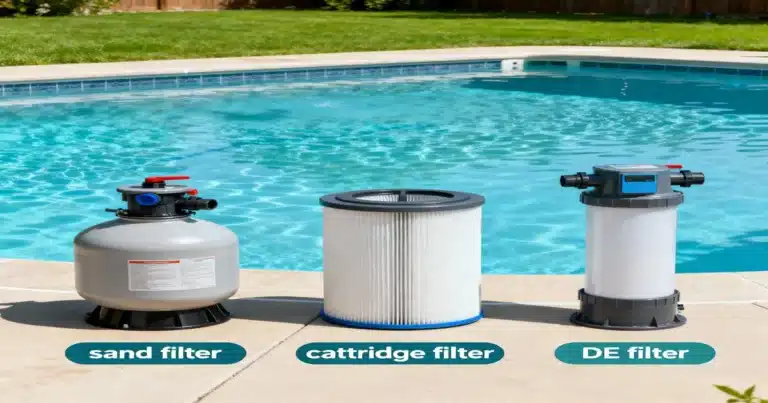
Maintaining sparkling, inviting water starts with the right filtration system. For homeowners who want a clear understanding of how to keep their pool pristine, the topic often centers on filtration effectiveness and maintenance effort. In fact, many readers begin with the resource that explains, understanding the three types of pool filters/ and then move into hands-on choices. This guide builds on that foundation, detailing the three main types—sand, cartridge, and DE filters—so you can pick the best fit for your pool size, climate, and lifestyle. By weighing filtration efficiency, maintenance needs, and budget, you’ll be empowered to keep your water clear with less guesswork.
1) Sand filters: simple, durable, and economical
Sand filters are among the most common choices for residential pools due to their simplicity and reliability. Water passes through a bed of fine silica sand, and dirt is trapped in the pores of the sand as the water exits via the multiport valve. One of the biggest advantages of sand filters is the low ongoing maintenance: backwashing is the primary routine task to restore flow and cleanliness. They tend to be forgiving for new pool owners and work well with moderate pool sizes. However, sand filters may require larger backwashing cycles after heavy use, and the filtration finesse is generally lower than cartridge or DE systems. If you want a straightforward setup with solid performance at a reasonable price, a sand filter is a dependable choice for many backyards.
2) Cartridge filters: higher efficiency with easier upkeep
Cartridge filters use replaceable pleated cartridges that capture finer particles than sand. Water flows through the cartridge media, which traps debris before it returns to the pool. The payoff is cleaner water and less backwashing, which saves water and energy over time. Cartridge filters are popular for smaller to mid-sized pools and for owners who prefer a lower maintenance routine with quick cartridge cleanouts using a hose. The trade-off is that cartridges can be more expensive to replace over the system’s lifetime, and they may require more frequent cleaning if the pool has heavy debris or runs in dusty environments. Overall, cartridge filters strike a balance between filtration efficiency and user-friendly upkeep.
3) DE filters: premium filtration for pristine water
DE, or diatomaceous earth, filters deliver the finest filtration among the three options. A layer of DE powder coats the filter grid, creating microscopic openings that trap particles as small as 2–5 microns. This results in exceptionally clear water and high efficiency for pools with heavy bathing loads or high bather turnover. The biggest considerations with DE systems are maintenance and cost. They require periodic addition of DE powder after backwashing and more careful handling due to the fine powder. While initially more expensive and slightly more hands-on, DE filters are favored by swimmers who demand crystal-clear water and are willing to commit to regular upkeep. For large pools or water features where precision filtration matters, DE can be a worthwhile investment.
How to choose the right filter for your pool
When deciding among these options, consider several practical factors. First, assess your pool size and usage: larger pools or high-traffic seasons may justify a DE or cartridge system for superior clarity. Next, evaluate maintenance time and water usage: backwashing for sand filters consumes more water, while cartridge filters reduce backwashing but require cartridge replacements. Noise sensitivity and power costs can also influence the decision, since some filter setups have longer run cycles. Lastly, consider your climate and debris load; windy areas or tree-rich yards may benefit from a filter type that tolerates frequent debris and allows easy cleaning. If you’re unsure, consult a local pool professional who can match filtration performance to your climate, pool shape, and maintenance routine.
For more pool care tips and product recommendations, visit the HomeVotel site. And if you’d like a direct overview of filtration options, you can explore the specific resource that mirrors this topic: understanding the three types of pool filters/.
In summary, understanding the three types of pool filters/—sand, cartridge, and DE—helps you align filtration strength with your maintenance capacity and water quality goals. By weighing upfront costs, ongoing maintenance, and efficiency, you can keep your pool inviting all season long.
 Admin
Admin