
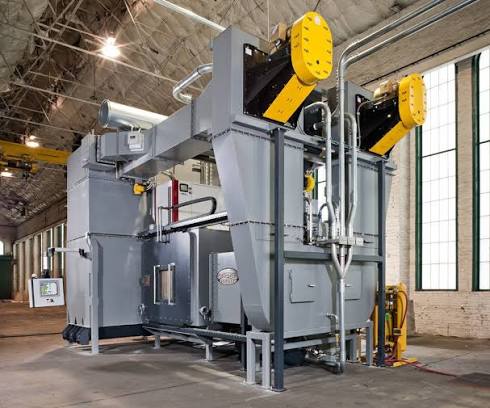
An altitude test chamber is an important piece of equipment for testing how products, components, and materials perform under controlled atmospheric conditions. By simulating reduced air pressure and, in many cases, changing temperature and humidity, these chambers help manufacturers evaluate products intended for aircraft, spacecraft, automotive applications, electronics, military systems, and other demanding environments.
Choosing the right chamber requires more than checking its physical dimensions. Capacity, pressure range, temperature performance, control accuracy, recovery speed, safety features, and energy requirements can all affect testing results. Understanding these factors makes it easier to select equipment that matches both current and future testing requirements.
Understanding Altitude Test Chamber Capacity
The first step in evaluating an altitude test chamber is determining its usable capacity. Chamber capacity refers to the amount of space available for the products or assemblies being tested. It is usually expressed through internal dimensions or internal volume.
Determine the Required Test Space
Consider the size and number of test samples that will be placed inside the chamber. The working area should provide enough clearance around each product for proper air circulation and instrumentation. Simply choosing a chamber that fits the product dimensions may not be sufficient.
Large products may require a walk-in or large-volume chamber, while smaller electronic components can often be tested in compact units. If multiple samples will be tested simultaneously, calculate the total space needed and allow room for sensors, fixtures, cables, and other equipment.
Consider Future Testing Requirements
A chamber should also support potential future applications. Selecting equipment with slightly more capacity than the immediate requirement can reduce the need for an expensive replacement when product sizes or testing volumes increase.
However, excessive capacity can increase purchase, installation, operating, and maintenance costs. The objective is to find a practical balance between present requirements and anticipated growth.
Evaluate the Pressure and Altitude Range
Pressure capability is one of the most important performance characteristics of an altitude test chamber. The chamber should be capable of reaching the pressure levels required by the applicable test procedure.
Check Maximum Simulated Altitude
Different applications require different simulated altitudes. Review the required altitude range and convert it into the corresponding pressure range when comparing equipment specifications.
A chamber intended for aerospace testing may require significantly lower pressures than one used for general environmental testing. The selected system should reach the required pressure consistently rather than only achieving it under ideal conditions.
Examine Pressure Stability
Reaching a target pressure is only part of the evaluation. The chamber should also maintain that pressure throughout the test. Pressure fluctuations can affect test conditions and make results less consistent.
Ask manufacturers about pressure control accuracy, stability, measurement resolution, and the chamber’s ability to maintain a programmed pressure profile over extended periods.
Assess Temperature Performance
Many altitude tests involve temperature changes as well as reduced atmospheric pressure. Therefore, temperature performance should be evaluated alongside pressure capability.
Review Temperature Range
Determine the lowest and highest temperatures required by your test procedures. The chamber should provide sufficient operating range without compromising pressure performance.
It is also useful to check whether the chamber can combine extreme temperatures with low-pressure conditions. Some applications require simultaneous environmental stresses, and not every system provides the same combined operating capability.
Check Temperature Uniformity
Temperature uniformity describes how consistently the desired temperature is maintained throughout the working space. Poor uniformity can cause different samples to experience different conditions.
Look for specifications covering temperature uniformity, temperature stability, and recovery time after opening the chamber or introducing a product at a different temperature.
Examine Control and Monitoring Systems
Modern chambers often use computerized control systems to manage pressure, temperature, humidity, and test sequences. A good control system should make it easy to create repeatable test programs.
Look for Accurate Sensors
Reliable sensors are essential because chamber performance depends on accurate measurement. Pressure and temperature sensors should provide the resolution and accuracy required by the test standard.
Calibration capability is equally important. Regular calibration helps confirm that displayed measurements remain trustworthy over time.
Evaluate Data Recording
Data logging allows engineers to review test conditions and identify changes during testing. Depending on the application, useful records may include pressure, temperature, humidity, test duration, alarms, and programmed set points.
Consider whether the system can export data in formats compatible with existing quality-control or engineering software.
Measure Pressure and Temperature Recovery
Recovery time is another useful performance indicator. When a chamber door is opened or a test sample is introduced, internal conditions can temporarily change. The chamber must then return to the programmed conditions.
A chamber with efficient refrigeration, heating, vacuum, and control systems can restore its test environment quickly. Shorter recovery times can improve laboratory productivity, especially when many tests are performed each day.
When comparing specifications, make sure recovery figures are based on comparable conditions. Product load, ambient temperature, target pressure, and chamber size can all influence recovery performance.
Consider Product Load and Heat Generation
The test sample itself can affect chamber performance. Electronics, batteries, motors, lighting systems, and other devices may generate heat during operation.
Therefore, capacity evaluation should include the thermal load created by the product. A chamber that performs well with an empty working space may behave differently when heavily loaded.
Manufacturers should be asked about maximum product heat load, cooling capacity, and performance under realistic test conditions.
Review Safety Features
Altitude testing involves pressure differences that can create significant mechanical stresses. Safety should therefore be a central part of chamber selection.
Look for appropriate door-locking systems, pressure monitoring, emergency controls, alarms, over-temperature protection, vacuum protection, and fault detection. The chamber should prevent unsafe operation when abnormal conditions occur.
Safety features should also be compatible with the products being tested. For example, testing batteries or electrical equipment may require additional protection and monitoring.
Check Construction and Maintenance Requirements
The construction materials used in an altitude test chamber can influence durability, cleanliness, maintenance, and long-term performance. Internal surfaces should be suitable for the products and environmental conditions involved in testing.
Maintenance requirements should be clearly understood before purchasing. Ask about vacuum pumps, filters, seals, refrigeration components, sensors, calibration intervals, and replacement parts.
Easy access to serviceable components can reduce downtime and simplify preventive maintenance.
Evaluate Energy and Operating Costs
Purchase price is only one part of the total cost of ownership. An altitude test chamber can consume significant electricity depending on its size, refrigeration system, vacuum equipment, and operating conditions.
Compare expected energy consumption, maintenance costs, service requirements, and component replacement expenses. A more efficient chamber may offer operational benefits over years of regular use.
Match the Chamber to Testing Standards
Testing standards should influence chamber selection from the beginning. Identify the standards, customer specifications, regulatory requirements, or internal procedures that the chamber must support.
Verify that the equipment can achieve the required pressure, temperature, ramp rates, stability, and test duration. Documentation demonstrating calibration and performance can also be important for regulated industries.
Compare Performance Before Making a Decision
The best evaluation involves comparing multiple specifications rather than focusing on a single feature. Create a checklist covering chamber dimensions, pressure range, temperature range, uniformity, stability, recovery time, control functions, safety systems, data logging, maintenance, and operating costs.
Request performance documentation and, when possible, conduct a demonstration using representative products. Realistic testing can reveal differences that may not be obvious from a specification sheet.
Conclusion
Evaluating an altitude test chamber requires a complete view of both capacity and performance. Internal working space must match product dimensions and test loads, while pressure and temperature systems must deliver stable and repeatable environmental conditions.
Control accuracy, recovery time, sensor quality, safety features, maintenance requirements, and operating costs should also be considered. By comparing these factors against actual testing requirements and applicable standards, organizations can select a chamber that provides reliable results while supporting efficient laboratory operations.
The right altitude test chamber is not necessarily the largest or most powerful option. It is the system whose capacity, environmental range, control performance, safety features, and operating characteristics align closely with the intended testing program.